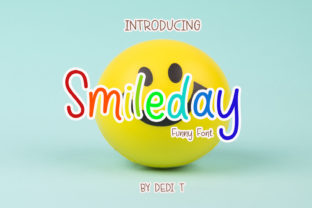
Smileday: A Fun Font for Creative Makers
There I was, sitting at my desk with a stack of candle jars and a blank label, trying to figure out how to make something special. I had just downloaded Smileday, and I couldn’t wait to see how it would look on a label. The font had this quirky charm that made me smile just looking at it. It wasn’t too formal, but it still felt polished enough for a handmade product.
Smileday is a display font that feels like it was designed for makers who want to add personality to their work. It has a playful, handwritten style with soft curves and little flourishes that give it a friendly, approachable vibe. It’s not the kind of font you’d use for a business proposal, but it’s perfect for labels, invitations, and anything that needs a bit of character.
Using Smileday on Labels and Packaging
I started by testing it on a candle label. I typed out “Coconut Vanilla” in Smileday and printed it on a sticker sheet. The result was charming—like something you’d find in a boutique shop or a small handmade store. The font didn’t feel too busy, which made it easy to read even on a small label.
For packaging, I used Smileday on a gift box tag. I added a simple line of text like “Handmade with Love” and paired it with a clean sans serif font for balance. The contrast worked well, and it gave the package a personal touch without being overwhelming.
Smileday for Greeting Cards and Invitations
One of my favorite uses for Smileday is on greeting cards. I created a birthday card with a bold title in Smileday and a short message in a simple serif font. The combination looked elegant but still had that handmade feel. It was perfect for a card that needed to stand out but still felt warm and inviting.
For wedding invitations, I tried using Smileday for the guest names and the event details. It added a whimsical touch that matched the couple’s personality. I paired it with a more traditional serif font for the main text, which helped keep the design from feeling too casual.
Smileday for Digital Printables and Wall Art
When I was working on a printable wall art set, I used Smileday for the title and some decorative elements. It gave the design a fun, creative energy that made the printables more engaging. I also used it for seasonal tags, like a holiday sign that said “Merry Christmas” in a playful way.
For planner pages, I added a few lines of text in Smileday to highlight important dates or goals. It made the pages feel more personalized and visually interesting. I found that it worked best when used sparingly, as too much text could make the design feel cluttered.
Considerations for Cutting Machines and Small Stickers
When I used Smileday for a Cricut project, I made sure to test it at different sizes. At smaller sizes, the font remained legible, but some of the finer details were lost. I found that using it for larger text, like on a sign or a banner, gave the best results.
For stickers, I kept the text short and simple. I avoided long phrases, as they could be hard to read when scaled down. Instead, I focused on using Smileday for titles, names, or short phrases that would catch the eye without being overwhelming.
Pairing Smileday with Other Fonts
One of the things I love about Smileday is how well it pairs with other fonts. When designing a product tag, I used it alongside a clean sans serif font for the product name and price. The combination felt modern yet friendly, which was exactly what I was going for.
I also experimented with pairing Smileday with a script font for a more elegant look. It worked well for a wedding invitation where I wanted to add a touch of sophistication while keeping the overall design light and approachable.
Checking Font Details Before Selling
Before I started selling any products with Smileday, I made sure to check the font’s licensing terms. It’s important to know what you can and cannot do with a font, especially if you’re planning to sell physical items, printables, or digital downloads.
I also looked into the font’s features, like alternate characters, ligatures, and swashes. These details can make a big difference in how the font looks and feels, especially when used in different contexts. I made sure to test all the styles to see which ones worked best for my projects.
Smileday for Seasonal and Holiday Projects
During the holidays, I used Smileday for a set of printable gift tags. I added a few festive elements like snowflakes and stars, and the font brought a sense of joy to the design. It was perfect for a handmade gift that needed a personal touch.
I also used it for a farmhouse-style sign that said “Welcome” for a seasonal decor project. The font gave the sign a cozy, inviting feel that matched the overall aesthetic. It was a great example of how Smileday can enhance the mood of a design without overpowering it.
Final Thoughts on Smileday
Smileday is a versatile font that adds personality to a wide range of handmade projects. Whether you're making labels, invitations, or digital printables, it brings a sense of fun and authenticity to your work. Its unique style makes it stand out, and its readability ensures it works well in different formats.
As a maker, I found that Smileday helped me create designs that felt more personal and engaging. It’s a great addition to any creative toolkit, especially for those who want to add a touch of charm to their handmade products.